Thyroid Swelling and Nodule Treatment in Vijayawada
A lump at the front of your neck can be the first thing you notice. Or you may feel nothing and see “thyroid nodule” on an ultrasound report. At Vascular Interventions Clinic in Vijayawada, Dr. Bhavani Shankar Manam reviews your symptoms and scans to discuss whether the lump needs monitoring, further tests or treatment. For some benign nodules causing pressure or visible swelling, radiofrequency ablation (RFA) is an option.
Does a thyroid nodule need treatment?
Many thyroid nodules need monitoring rather than a procedure. Assessment may include thyroid blood tests, detailed ultrasound and fine-needle aspiration or another biopsy when indicated. A benign diagnosis needs to be established before considering ablation. Suspicious or indeterminate findings require further evaluation. General thyroid disease, low thyroid hormone levels and a symptomatic benign nodule are different problems and do not all benefit from the same treatment.
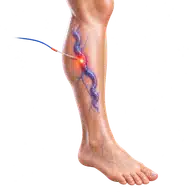
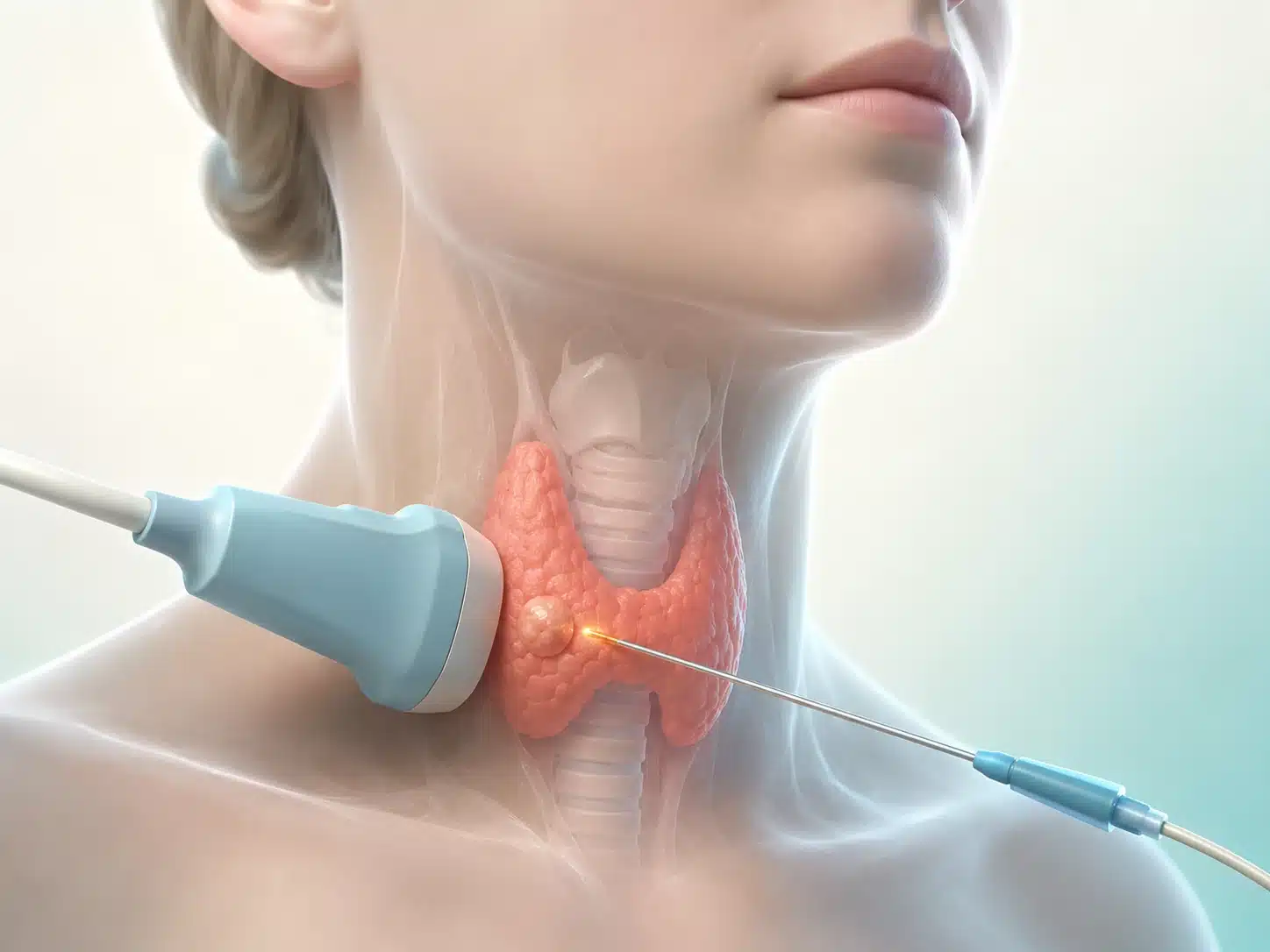
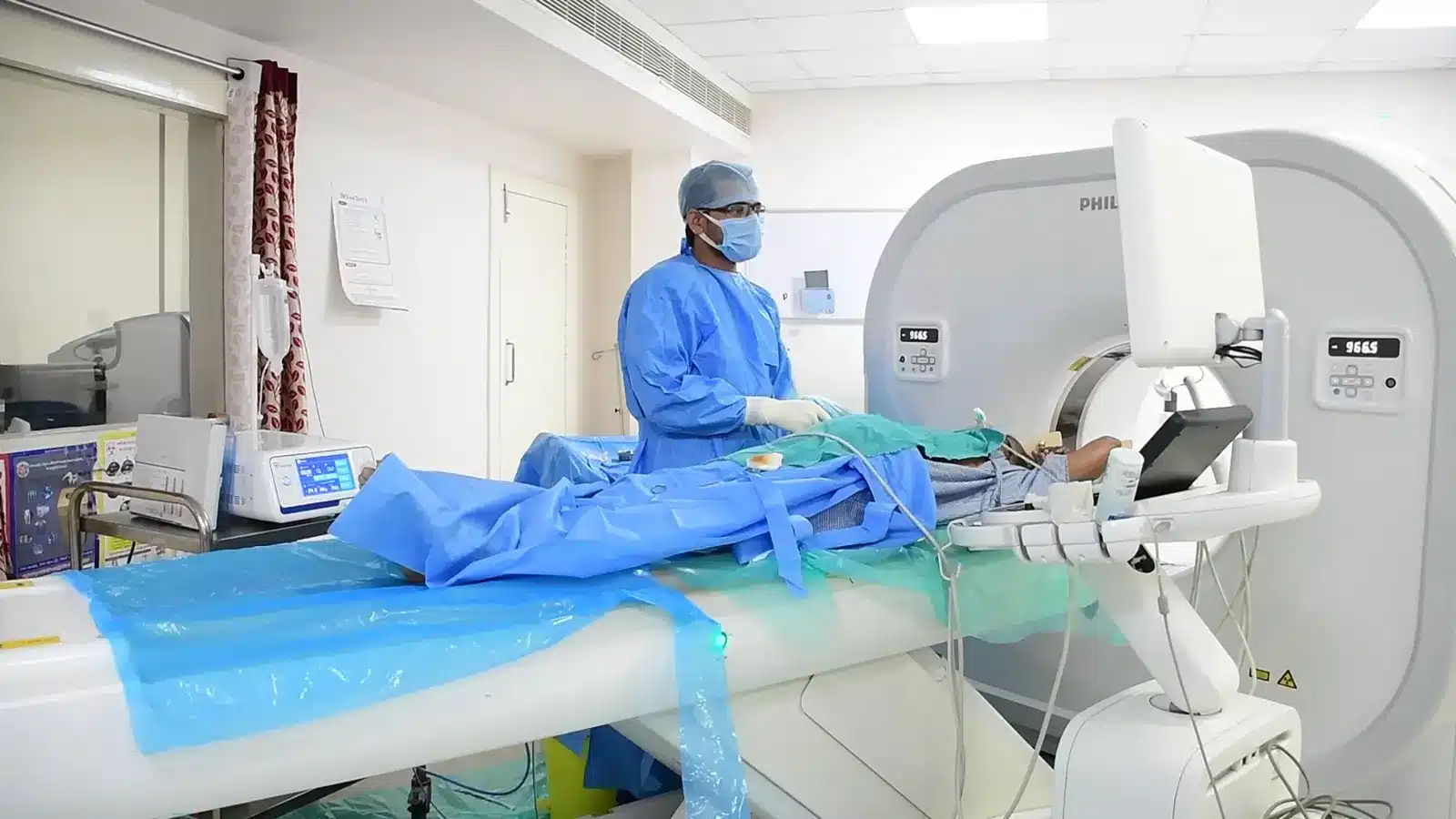
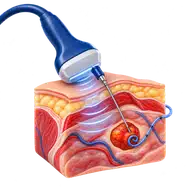
During thyroid nodule ablation in Vijayawada, local anaesthetic is used and the electrode is moved through small zones of the nodule to deliver controlled heat. Ultrasound helps protect the voice nerve, blood vessels, trachea and normal thyroid tissue.
Monitoring, ablation and surgery answer different needs. A benign thyroid nodule that is small and causes no symptoms may only need follow-up. For a confirmed benign nodule that causes swallowing discomfort, neck pressure or a visible bulge, radiofrequency ablation (RFA) may reduce its size without removing the thyroid lobe. Shrinkage takes months. A suspicious scan or an unclear biopsy needs further investigation before any decision about ablation.
What ultrasound and FNAC can tell you
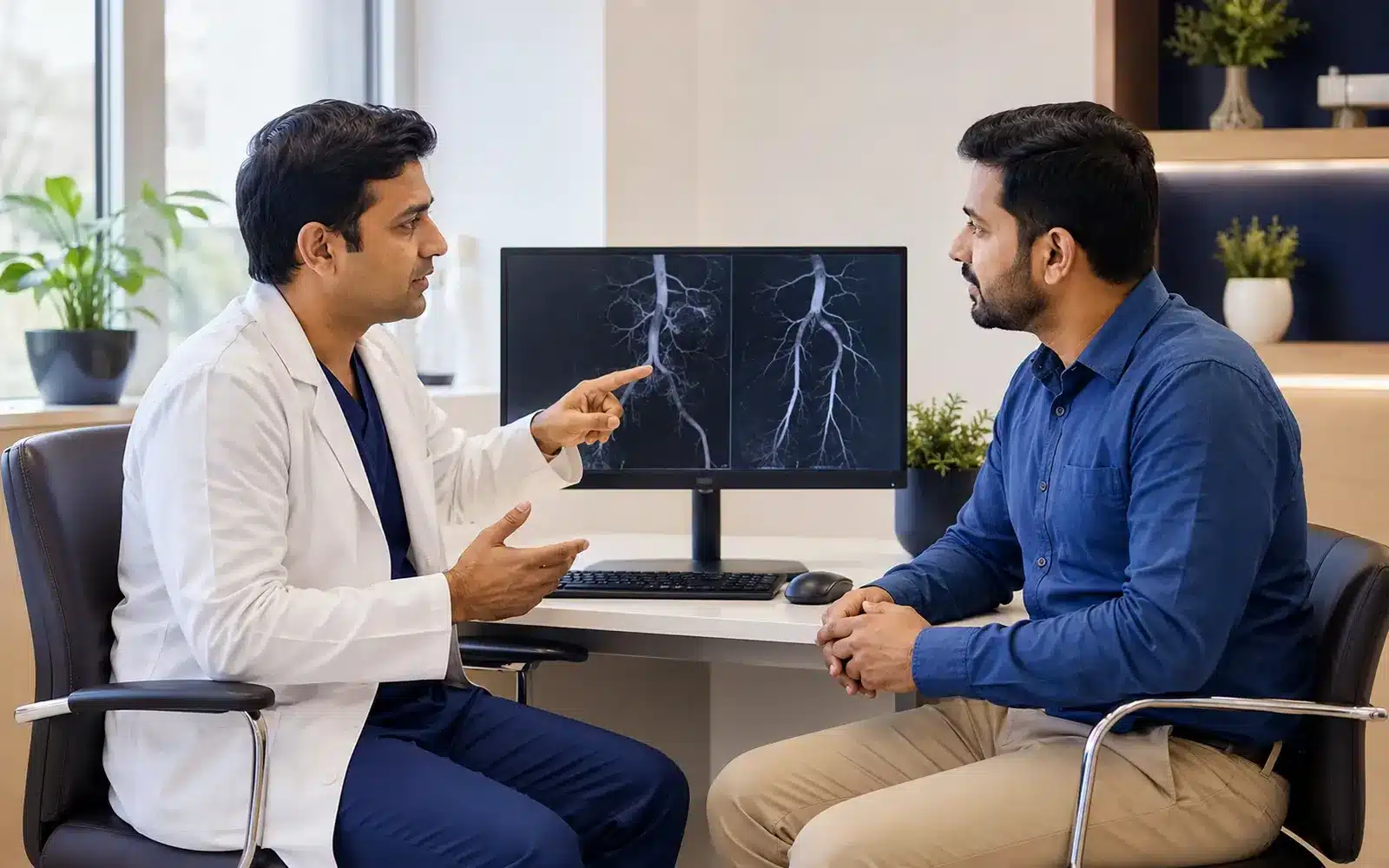
Ultrasound measures the lump and shows whether it is solid, fluid-filled or mixed. A thyroid blood test checks how the gland is working; a normal result alone cannot tell whether a nodule is benign. If fine-needle aspiration cytology (FNAC) is advised, a thin needle collects cells for examination. Bring the actual cytology report: its findings help determine whether monitoring, another sample or a surgical opinion is appropriate.
What symptoms can a thyroid lump cause?
How doctors assess thyroid gland swelling
Thyroid RFA: how radiofrequency ablation works
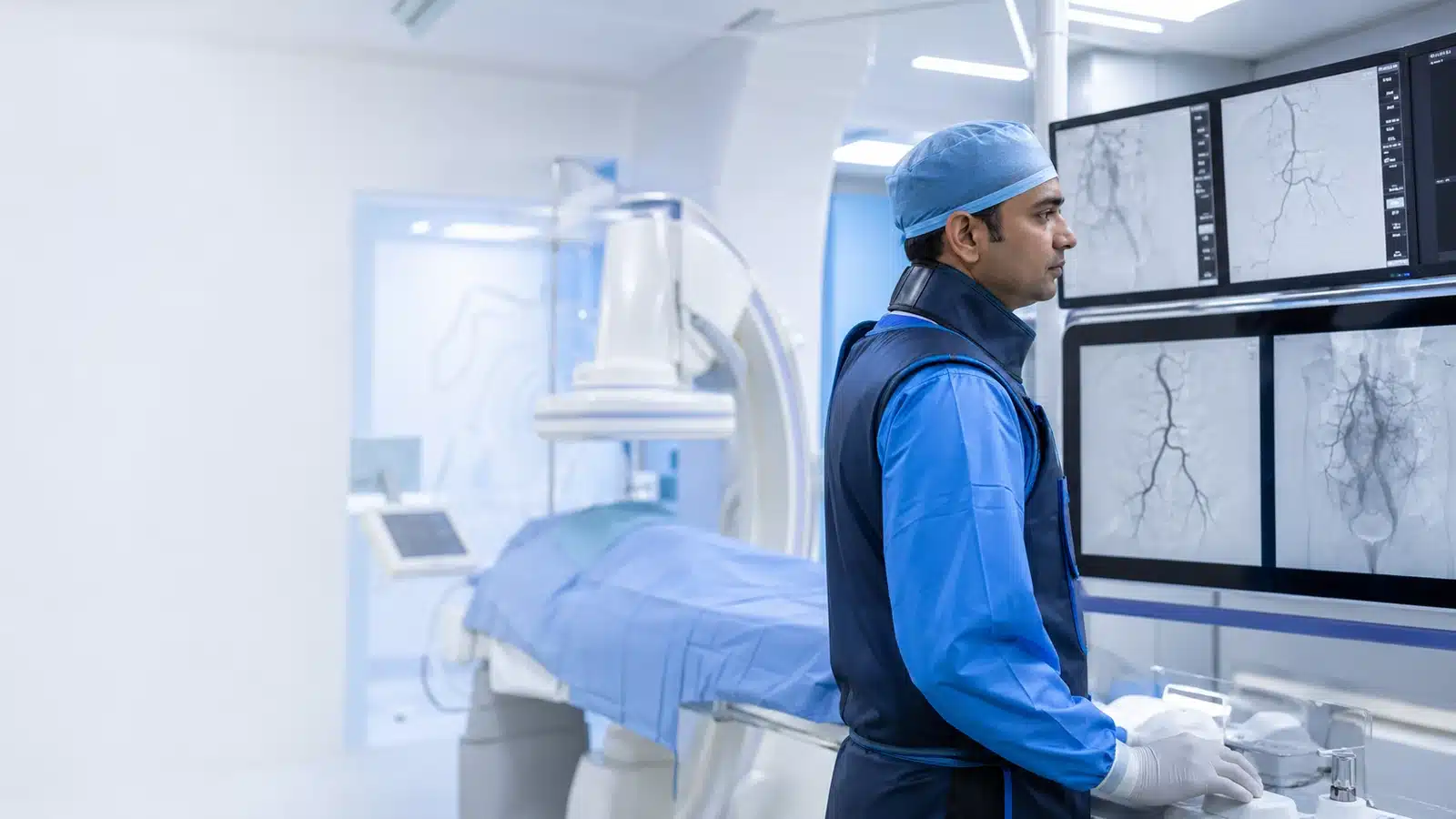
During Thyroid Nodule Ablation , imaging helps the interventional radiologist follow the anatomy, position the catheter or needle and confirm the treatment target. The exact technique and devices are chosen for the patient’s diagnosis and scan findings.
Ultrasound maps the nodule and nearby structures.
Local anaesthetic is applied.
A fine RFA electrode treats the nodule in small controlled zones.
Ultrasound checks the treated area before discharge.
Recovery and follow-up
Temporary neck discomfort, swelling or voice change can occur. Patients receive advice about eating, medicines and warning signs. Ultrasound follow-up measures volume reduction and checks for regrowth.
After thyroid nodule ablation, follow-up ultrasound measures shrinkage and checks for regrowth. Some nodules require repeat treatment. Risks include bleeding, swelling, pain, voice change from nerve injury and injury to nearby structures. A rapidly enlarging swelling, breathing difficulty or significant voice change needs prompt medical review. Bring previous ultrasound images, biopsy results and thyroid blood tests to the clinic consultation. See the separate image-guided biopsy guide to understand how tissue sampling differs from ablation.
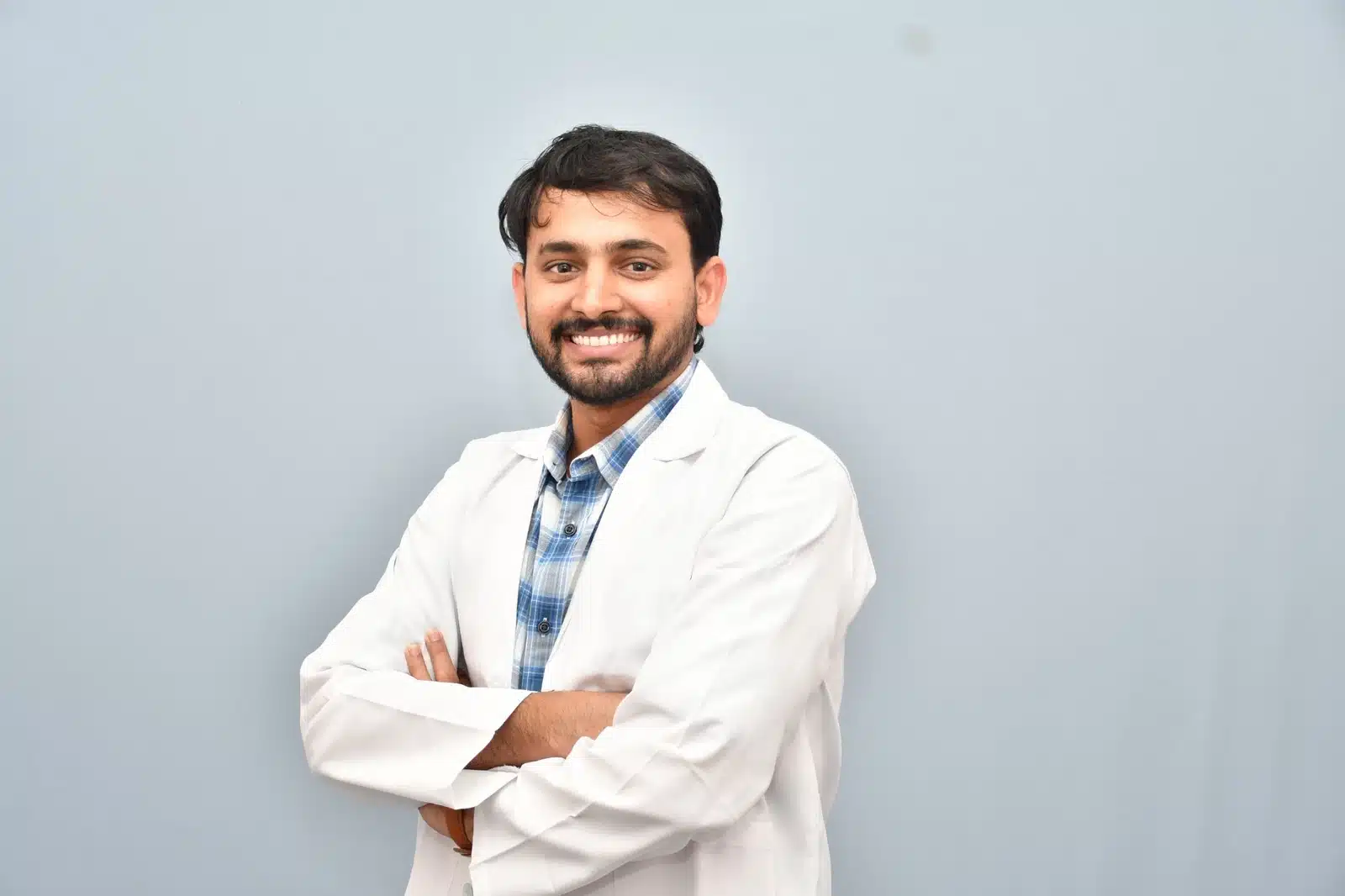
Meet Dr. M. Bhavani Shankar Manam
MBBS, MD, DNB (Radio Diagnosis), FIVR
Consultant Vascular & Interventional Radiologist with experience across vascular, non-vascular and oncological image-guided procedures and more than 3,000 cases. Every treatment plan begins with a review of symptoms, reports and imaging, followed by a clear discussion of suitable options.
Frequently asked questions
If you have noticed a neck swelling or your scan mentions a thyroid nodule, these questions can help you prepare for your appointment.
If you have noticed a neck lump and do not know its cause, a physician can examine it and advise whether you need a thyroid ultrasound or a specialist referral. If a scan has already identified a thyroid nodule, Dr. Bhavani Shankar Manam, a Vascular & Interventional Radiologist in Vijayawada, can review the images and discuss whether image-guided treatment is suitable.
A goitre means the thyroid gland is enlarged. A nodule is a distinct lump within the gland. They can occur together, but not every neck swelling comes from the thyroid. Ultrasound helps distinguish these findings.
Many benign nodules that cause no symptoms can be monitored. For a confirmed benign nodule causing pressure, difficulty swallowing or a visible bulge, RFA may be an alternative to surgery. A suspicious scan or biopsy needs specialist assessment before deciding on treatment.
No. It usually shrinks gradually over months.
Not every thyroid lump needs a biopsy. The ultrasound appearance, size and clinical history help the doctor decide whether fine-needle aspiration cytology (FNAC) is useful. If you are considering ablation, bring any previous FNAC report so the doctor can review whether the nodule has been confirmed benign or whether more sampling is needed.
Regrowth can occur and may require surveillance or repeat treatment.
Ask whether Thyroid Nodule Ablation is suitable for you.
For a thyroid swelling or nodule consultation in Vijayawada, bring earlier ultrasound images, thyroid blood tests and any FNAC report. If surgery has been suggested, bring the referral so the team can explain whether ablation is a reasonable alternative in your particular case.